


The word “Metaverse” appears in tech news, brand campaigns, investor talks, and casual conversations on social media. Some people say it’s the future of the internet. Others say it’s overhyped and unnecessary.
So, What Is the Metaverse Really?
The truth sits somewhere in between.
The Metaverse isn’t magic, and it isn’t a scam either. It’s an idea that’s still forming, still messy, and still misunderstood. To understand it properly, you need to stop thinking about buzzwords and start thinking about how people already live online today.
The internet didn’t change overnight. It moved in phases. First websites. Then social media. Then mobile apps. Now, we’re watching the early stages of something more immersive.
That shift is often called the Metaverse. It’s simply a continuation of this shift, where digital experiences stop being flat and start feeling more immersive and shared. It is a digital space built around immersive digital experiences where people don’t just consume content; they exist inside it.
[octaads_toc]
What Is the Metaverse and Why Brands Are Paying Attention?
The Core Idea Behind the Metaverse
The Metaverse isn’t one app, platform, or company. It’s a collection of digital spaces where people can interact in real time using virtual identities, often called avatars.
Think of it as a more immersive version of the internet. Instead of scrolling and clicking, you’re present inside digital environments. You can attend events, explore virtual spaces, work with teams, shop, play games, or just hang out.
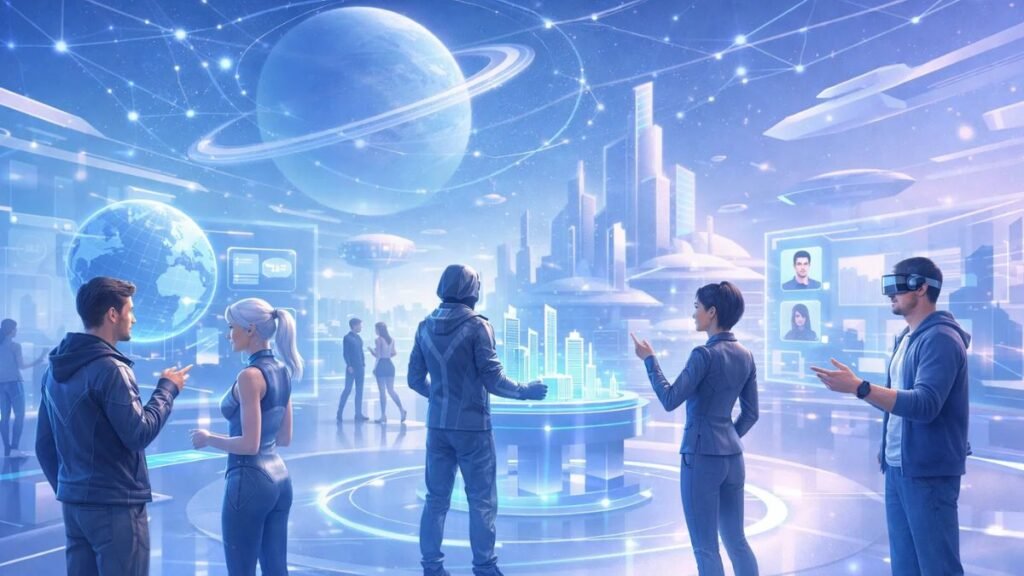
Some Metaverse experiences use technologies like virtual reality (VR) or augmented reality (AR). Others work on regular screens. You don’t always need a headset to participate.
The key idea is shared experience.
You’re not scrolling, you’re inside branded environments. Shared presence turns consumers into participants, perfect for immersive affiliate storytelling. No jargon needed: it’s the internet, but lived.
How the Metaverse Works for Digital Marketing and Brand Experiences?
The Metaverse is built on a mix of existing technologies that are already influencing experience-led marketing.
Technologies Powering the Metaverse
- Virtual Reality creates fully digital environments
- Augmented Reality adds digital elements to the real world
- Blockchain helps with ownership of digital assets
- Cloud computing allows many users to interact simultaneously
You don’t need to understand all of this to understand the Metaverse. What matters is how it’s used.
Would you attend a meeting where everyone shows up as an avatar instead of switching on cameras? Would you explore a store before buying, without leaving your home?
That’s the kind of interactive brand engagement and virtual brand experiences the Metaverse is exploring.
Why the Metaverse Is Bigger Than Gaming for Brand Engagement?
This is one of the biggest misconceptions. Gaming played a huge role in shaping early Metaverse experiences, but it’s no longer the main focus. Here’s where the shift is already visible:
Industries Already Using Metaverse Experiences
- Education and training: Virtual simulations cut costs by 30-50% versus traditional methods.
- Retail and e-commerce: Interactive stores lift conversions through hands-on exploration.
- Real estate and virtual property tours: Dubai virtual property tours streamline sales via free-zone initiatives.
- Live events and concerts: Travis Scott’s Fortnite gig drew 12 million attendees.
- Marketing and brand experiences: AI-driven avatars deliver hyper-personalized outreach.
Universities are using virtual spaces for training. Brands are hosting digital product launches. Artists are performing live concerts in virtual venues. Companies are experimenting with virtual offices and collaboration spaces. The idea isn’t escape from reality. It’s extending what’s possible digitally.
How Brands Are Using the Metaverse to Create Immersive Experiences?
Brands aren’t entering the Metaverse just to look futuristic. They’re experimenting with new ways to connect with audiences.
Some are building virtual stores where users can explore products interactively. Others are launching digital fashion, collectibles, or limited edition experiences. A few are hosting events that feel more engaging than traditional online ads.
For marketers, this opens up a different kind of storytelling. Instead of showing a message, brands can create virtual brand experiences.
Real-World Metaverse Examples Brands Are Using Today
- Nike’s Nikeland (Roblox): Over 70 million visits where users test virtual sneakers and buy physical pairs.
- Gucci Garden: Roblox drop sold Dionysus NFT bags for $4,000+, celebrating their 100th anniversary.
- Dubai Innovators: DIFC studios power metaverse retail and events, linking to lifestyle hotspots like Jumeirah.
Users remember exploring spaces over banners—74% of internet users are already joining or considering the Metaverse. These metaverse examples illustrate why virtual brand experiences often leave a stronger impression than traditional online advertising.
What Does the Metaverse Mean for Digital Marketing Strategy?
The Metaverse changes how attention works.
Traditional digital marketing relies on clicks, impressions, and short interactions. In the Metaverse, users spend time. They participate. They explore. That creates deeper engagement, but it also demands better content.
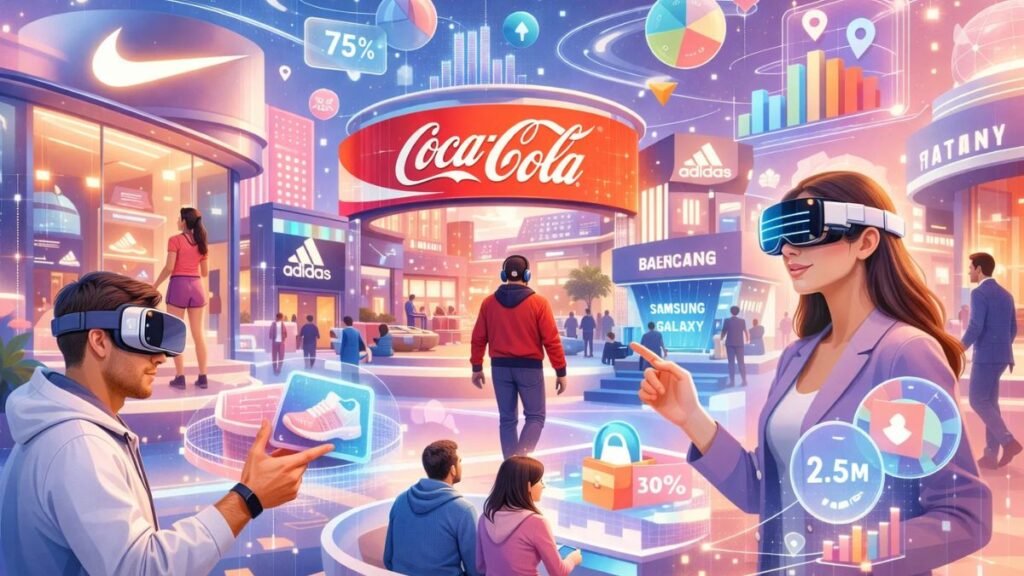
For affiliate marketing and performance-driven brands, this means thinking beyond banners and links. The focus shifts to experience-led discovery and long-term brand recall.
It’s still early. There are no fixed rules yet.
And that’s exactly why brands are testing now instead of waiting.
Is the Metaverse Ready for Brands and Marketers Today?
Not entirely. The technology is still evolving. Access can be expensive. User adoption is uneven. Privacy and data security remain real concerns. Not every experience feels polished or practical yet.
And that’s okay. Every major shift in digital marketing began with experimentation. Social media didn’t look the way it does today. Mobile apps didn’t replace desktops overnight. The Metaverse marketing is in its experimental phase. Some ideas will fail. Others will quietly become normal.
Why the Metaverse Matters for Modern Marketing?
The metaverse matters because it changes how people spend their attention online. Instead of competing for seconds on a feed, brands compete to create environments worth staying in.
For marketers, this means:
- Less interruption, more participation
- Fewer impressions, deeper engagement
- Short-term campaigns balanced with long-term presence

This is why many see the metaverse as the future of marketing — not because it replaces existing channels, but because it reshapes how brand experiences are built and remembered.
Is the Metaverse the Future of Marketing? What Comes Next?
The Metaverse isn’t replacing the internet, and it isn’t replacing traditional digital marketing either.
What is the metaverse’s role then? It is changing how digital experiences feel.
For brands, creators, and marketers that care about interaction, storytelling, and engagement, Metaverse marketing represents a new layer of opportunity. It won’t matter to every business immediately, but it will matter to those building long-term brand presence.
The real question isn’t whether the Metaverse will take over marketing. It’s how brands will choose to use it as the space evolves. And that could become the foundation of modern marketing.
FAQs
The Metaverse is a collection of shared digital spaces where people can interact, explore, and experience content together in real time. Instead of just viewing the internet on a screen, users participate in digital environments using avatars or interactive interfaces.
No. While gaming helped popularize early Metaverse experiences, today it extends far beyond that. Education, retail, real estate, live events, and marketing are all using Metaverse environments without requiring VR headsets.
Brands are creating virtual stores, hosting digital events, launching interactive products for virtual brand experiences, and experimenting with immersive storytelling. These environments allow deeper engagement than traditional ads because users spend time exploring instead of just clicking.
Metaverse marketing is still emerging, but it’s already effective for brands focused on long-term engagement, experimentation, and brand recall. It works best as a complement to existing digital strategies, not a replacement.
Marketers don’t need to fully commit yet, but early experimentation is valuable. Testing small, low-risk experiences helps brands understand user behavior and prepare for future shifts in digital interaction.
Last Updated on: February 23, 2026
Leave A Comment