


The most important digital marketing channel for your business all comes down to your niche, goals, and timeframe. Data and it leads to building an audience for trust and is ideal for growing in the long term. You’ll want to combine SEO and PPC leads for building and selling instantly; customer retention with email marketing campaigns can provide huge ROI via the email you build from complementary channels.
Every single one of those digital marketing approaches exists for a reason at a different point on the customer funnel. You’re going to pull in high-intent searchers with the intent to solve with organic, capture immediately visibility on top of Search at will, but trying one will certainly stall growth versus a solid plan where you’re able to capture a significant audience at an appropriate price.
At OctaAds Media, we have found that combining PPC ads to generate quick results with a well-run email marketing campaign to keep customers always provides the highest ROI. In effect, a proper blend of speed, budget, and a bit of waiting period to make your traffic turn into a permanent source of income is what is needed.
What Are the Different Types of Digital Marketing?
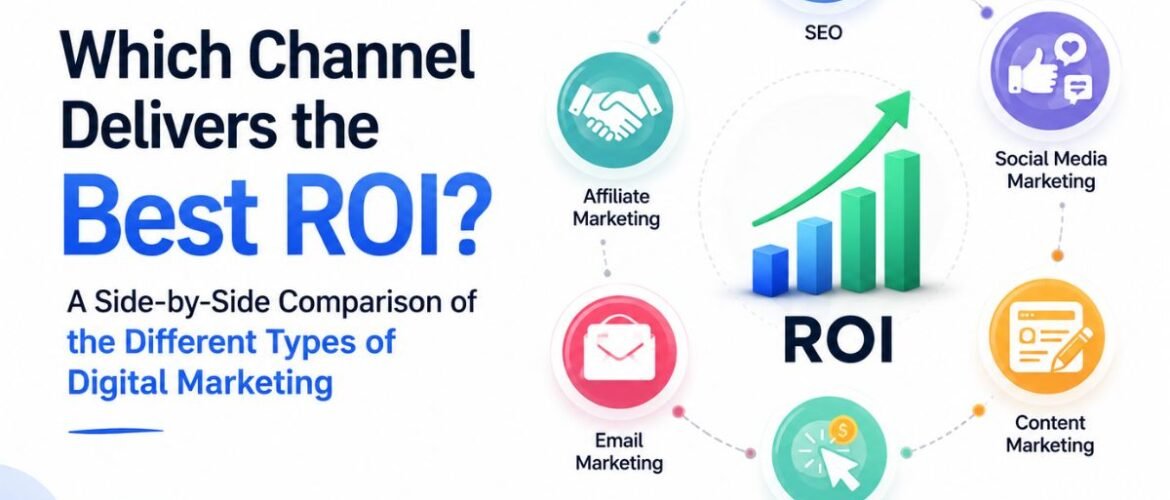
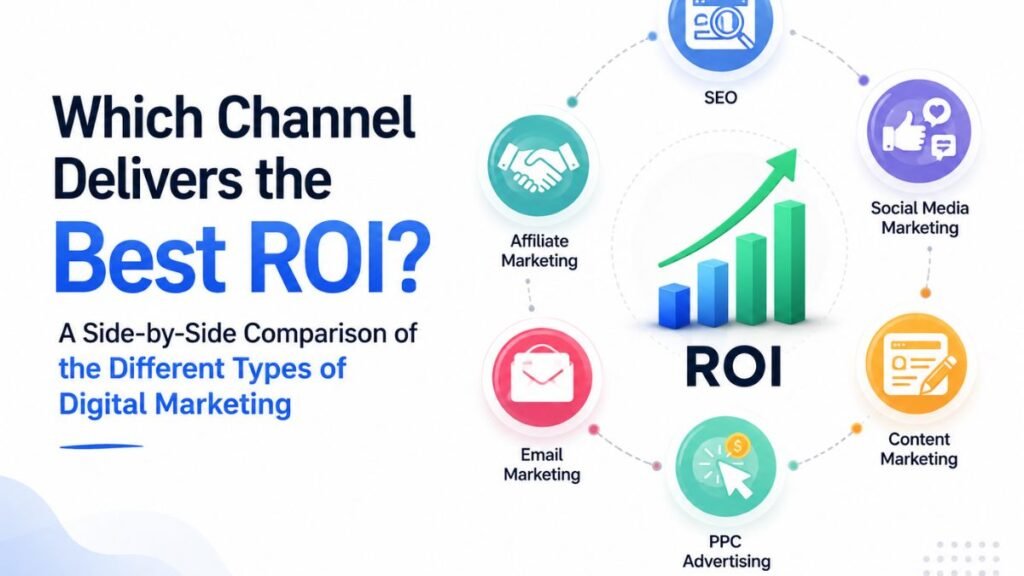
Different forms of Digital Marketing include SEO, Social Media Marketing, Content Marketing, Pay per click advertising, Email Marketing & Affiliate Marketing. All of these forms constitute Digital Marketing in different ways, but each of them pulls different leverage; some of them are meant for slow and cumulative visibility, whereas others create instant and transitory traffic. When taken altogether, they become the perfect marketing tool pack for all online businesses to grow and flourish.
You may not need to use them all at the same time. Actually, almost every business first selects one or two Digital Marketing channels which best suit the places where their customers are already hanging around, and then they can gradually add more channels as their marketing budgets and internal confidence allow!
How Digital Marketing Channels Work Across the Customer Journey
Each potential customer passes through different phases: awareness, consideration, conversion, retention, and ultimately advocacy. During these phases, different digital marketing tools come up at specific times. Usually, social networking and content marketing catch potential customers early, just when they are starting to become aware of an issue. It is likely that through search engines and social media, the potential customer is exposed to different brands. Pay-per-click and search engine optimization advertising are often the first things that catch a buyer’s eye while he is comparing different offers. Email marketing kicks off once the sale has been made; with its help, customers are constantly reminded and encouraged to buy again and again.
Why No Single Digital Marketing Channel Has the Best ROI
This is the part that even the majority of beginners skip. Besides clicks or cost per lead, the return on investment of a channel depends on factors such as attribution model, customer lifetime value, acquisition cost, and the duration of your sales cycle. A channel like SEO that seems costly at first glance may gradually become your cheapest revenue source eighteen months later. Therefore, comparing digital marketing channels based only on cost can be misleading.
What Are the Main Digital Marketing Channels?
Before comparing ROI, it helps to know what you’re actually comparing. Here are the core digital marketing channels most businesses rely on:
- Search Engine Optimization: Organically, being found on Google through content, mentality of technical fixes and backlinks. It takes time, but traffic keeps building without continuing spend.
- Social Media Marketing: Gaining an audience through organic methods, also paid campaigns pipelines on Instagram | LinkedIn | Facebook. Good for discovery as well as community and remembering people.
- Content Marketing: Write some original research, build blogs and guides, make videos to teach your readers everything you learned so that they can trust you before they are ready to purchase.
- Pay Per Click Advertising: Paid search, shopping ads, and display campaigns that buy you instant visibility and traffic as soon as the budget is switched on.
- Email Marketing: Automated, segmented deliverables to an audience that you already own — perfect for retention and repeat purchases/upsells.
- Affiliate Marketing: Get someone else to sell your product for a share of the sale, so you only pay when there is an actual sale.
Many marketers at OctaAds Media treat these channels as connected pieces, not separate campaigns – a blog post might bring someone in, a retargeting ad might bring them back, and an email might close the sale.
What Are the Different Types of Online Marketing?
“Online marketing” is really just the umbrella term covering every digital marketing activity above. Two useful ways to slice it are organic versus paid, and inbound versus outbound.
Organic vs Paid Online Marketing
Organic efforts, like SEO and unpaid social posts, take longer to show results but don’t disappear the moment you stop spending. Paid efforts, like PPC and paid social, work instantly but stop the second the budget runs dry. Most healthy digital marketing strategies use both — paid for speed, organic for staying power.
Inbound vs Outbound Digital Marketing
Inbound marketing waits for people to find you through search, content, or referrals. Outbound marketing goes out and interrupts people – think cold ads, cold email, or display banners. Both have a place in a well-rounded digital marketing plan, depending on how aware your audience already is of your product.
What Are the Different Types of Online Advertising and Digital Advertising?
It’s worth separating advertising from marketing here. Types of online advertising and types of digital advertising refer specifically to the paid slice of digital marketing — search ads, display ads, social ads, and video ads. Search advertising captures people actively looking for a solution, display and video advertising build awareness among people who aren’t searching yet, and social advertising sits somewhere in between, using targeting to reach the right audience at the right moment.
What Are the Different Types of Internet Marketing and Kinds of Digital Marketing?
“Types of internet marketing” and “kinds of digital marketing” are phrases people search almost interchangeably with digital marketing itself – they cover the same search, social, content, email, and affiliate mix, plus a few newer additions worth knowing:
- Performance Marketing: Campaigns judged purely on measurable outcomes – clicks, leads, or sales – rather than impressions or reach.
- Influencer and Creator Marketing: Partnering with creators whose audience already trusts them, borrowing that trust for your brand.
- Mobile and App Marketing: Push notifications, app store optimisation, and mobile-first campaigns built for how people actually use their phones today.
How Do the Different Digital Marketing Channels Compare?
Here’s where things get practical. The table below compares the major digital marketing channels using the same criteria — so you’re not just reading six separate descriptions, but actually seeing how they stack up against each other.
| Channel | Initial Cost | Speed to Results | Buyer Intent | Scalability | Retention Value | Best For |
| SEO | Low-Med | Slow (3-9 mo) | Med-High | High | Medium | Long-term organic growth |
| PPC | Med-High | Immediate | High | High | Low | Fast, high-intent leads |
| Social Media | Low-Med | Medium | Low-Med | High | Medium | Awareness & discovery |
| Content | Low-Med | Slow | Medium | High | Med-High | Authority & trust |
| Low | Fast (owned list) | High | Medium | Very High | Retention & repeat sales | |
| Affiliate | Perf-based | Medium | Med-High | High | Low-Med | Pay-for-results acquisition |
A quick read of that table tells you something important: cheap and fast rarely means “best ROI” – it just means different trade-offs for your digital marketing budget.
Which Digital Marketing Channel Has the Highest ROI?
If you’re asking which type of digital marketing has the best ROI, the honest answer is: it depends on your timeline. There isn’t one universal winner – but a few channels consistently punch above their weight.
Why SEO Can Deliver Strong Long-Term ROI
A ranked page will just keep bringing in the traffic without having you pay per click. This compound growth of search engines is one of the hardest long plays in all of digital marketing despite the fact it will take months to bear any Fruit.
Why Email Marketing Can Produce High Customer-Level ROI
You already own this audience; you’re not paying extra for every impression. The algorithm won’t change overnight. Email marketing remains one of the most cost-effective channels out there simply because it relies on relationships you already have in place.
Why PPC Can Deliver Fast but Variable ROI
Pay per click campaigns can activate immediate traffic in hours, but their return is extremely susceptible to your margins, conversion rate, and keyword competition. Speed over cost-mostly.
Why the Best ROI Often Comes From a Channel Combination
In reality, best digital marketing strategies usually don’t utilize a single channel. SEO lays the groundwork, PPC can fill the void until you begin to receive organic traffic, and email is used to re-engage your current customers.
Which Digital Marketing Channel Is Most Effective for Different Business Goals?
Which digital marketing channel is most effective genuinely changes based on what you’re trying to achieve:
- Brand Awareness: Social media, video, display ads, and influencer content cast the widest net.
- Immediate Lead Generation: PPC and paid search catch people who are already searching with intent.
- E-commerce Sales: A mix of SEO, shopping ads, social advertising, email, and affiliate marketing tends to work best.
- B2B Lead Generation: SEO, content marketing, LinkedIn ads, and email nurturing build trust over longer B2B sales cycles.
- Customer Retention: Email, loyalty programs, and retargeting keep existing customers coming back without new acquisition costs.
How Should You Measure Digital Marketing ROI?
Vanity metrics like impressions or likes won’t tell you if your digital marketing is actually profitable. These numbers will:
- ROAS vs ROI: ROAS measures return on ad spend alone; ROI factors in your total cost, including team time and tools.
- Customer Acquisition Cost (CAC): What it actually costs you to win one paying customer through a given channel.
- Customer Lifetime Value (CLV): The total revenue a customer brings over their relationship with you – a cheap first sale can still be a great deal long-term.
- Conversion Rate and Revenue Per Visitor: How efficiently a channel turns visitors into paying customers.
- Attribution: The last click rarely deserves all the credit — someone might discover you on social, research you on Google, and buy after an email.
Which Channel Delivers the Best ROI? A Practical Verdict
When it comes to deciding which channel has the best ROI, there is no one winner. The effectiveness of your overall digital marketing strategy is largely dependent on how well all the channels work together to create a cohesive and supportive ecosystem throughout the buyer journey.
Instead of choosing only one, the best performance can provide from the balance of separate channel advantages:
- Search Engine Optimization (SEO): A compounding, long-term source of organic traffic.
- Pay-Per-Click Advertising (PPC): Provides immediate visibility and you will get sales leads in seconds.
- Email Marketing: Retains customers & has the next highest total lifetime retention.
- Content Marketing: Educates high-intent buyers, builds topical authority, and fuels all other digital channels.
- Social Media Campaigns: Builds active community engagement, brand awareness, and audience loyalty.
- Affiliate Marketing: Expands your reach through performance-based partner referrals with minimal upfront risk.
So in the end, the real digital marketing ROI is a result of synergies between different elements. Matching quick paid conversion gains with steady organic authority and automated lifecycle email sequences will create a continuous revenue cycle. Through customization of the channel mix to your timeline, budget, and your target audience’s characteristics, you maximize your return with a balanced effort between the traffic sources.
You are already planning to stop guessing and start growing, correct? Join forces with Octaads Media for a digital strategy built to generate more leads and sales for your company.. Don’t wait! Book your first meeting FREE and increase the profitability of your marketing investment!
Disclaimer
This article is meant for general informational purposes and reflects common industry patterns, not guaranteed outcomes. Actual digital marketing ROI varies by industry, budget, execution quality, and market conditions. Always validate any strategy against your own campaign data before committing significant spend.
Frequently Asked Questions
Digital marketing includes SEO, social media marketing, content marketing, pay-per-click advertising, e-marketing, and affiliate marketing. Each strategy serves a different purpose, with some focusing on building visibility in the long term and others being great drivers for immediate traffic and sales.
No digital marketing type is a perfect match for all kinds of products and services and all businesses. It depends on your situation: budget, sales cycle and timeline. For example, SEO and email are considered marketing methods that bring in high ROI in the long term. Whereas PPC stands for speed.
Digital advertising is just a paid form of digital marketing; you get results through the use of PPC, banners, and social ads. On the other hand, digital marketing is a comprehensive strategy that also includes organic channels such as SEO and content creation that don’t require direct ad spend.
It depends on budget and goals, but many small businesses start with SEO and social media for affordable reach, then add PPC once they understand their margins and customer acquisition costs.
While SEO provides continuous traffic without additional advertising costs, PPC gives quick visibility. Most efficient online marketing plans consist of both methods with respective roles in the marketing plan.
ROI, ROAS, customer acquisition cost, customer lifetime value, conversion rate and attribution should be tracked. No one metric reveals all the information about digital marketing efficiency.
Last Updated on: September 25, 2026
Leave A Comment