


You spend your time, money and efforts in digital marketing, but it didn’t give you the results that you expected. You are not alone. If we look into 2026, nearly every company has a web presence; very few of them are only implementing it through a single, multi-channel strategy. The difference between brands that keep expanding and those that stay unchanged is not the amount of money spent but the planning and the way of carrying it out.
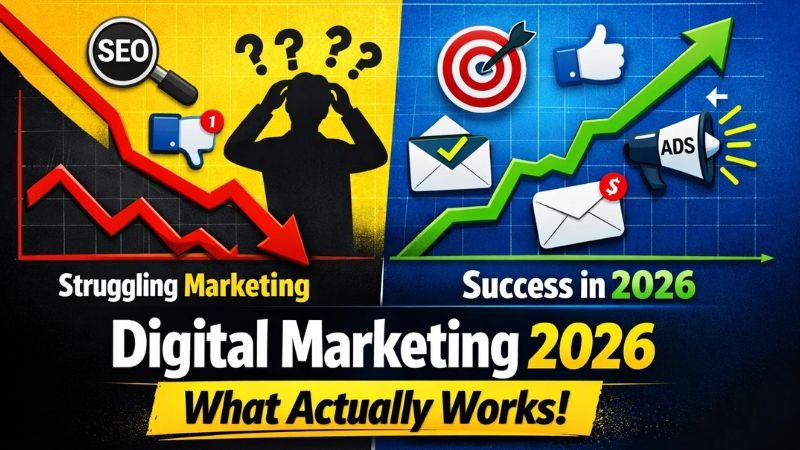
We made this guide to help you with that. It shows you every important part of 2026 digital marketing that counts. In this blog, you’ll find information on SEO marketing and Content Marketing, social media marketing, email marketing strategy, Pay Per Click (PPC), lead generation strategies and Affiliate Marketing. Each section gives enough detail so you can act on it, not just sit back and learn. Everything is clear and ready for use.
Whether you are a newcomer or an old player in the market, these tips work for any size. Octaads Media provides digital marketing services so your brand can expand and grow with real outcomes. You get results you can track. The support is focused on what works. Goals are set clearly. Progress is measured daily. Each step moves you forward.
Building a Solid Digital Marketing Strategy
An effective digital marketing plan provides a guideline for accomplishing the objectives of a business by aligning the methods, messages, and ends. It is really important that you set goals and identify the target audience, decide which of your objectives will be the main priority of the business, and develop the criteria through which you will be able to measure the success of your campaign prior to launching your very first marketing campaign.
- Define SMART Goals: Set goals which are specific, measurable, achievable, relevant and time-bound, and the example could be to obtain 500 qualified leads or increase organic traffic by 40% in the following 6 months.
- Build Buyer Personas: Using the zero moment of truth, divide your audience into segments based on demographics, online behaviour, and pain points and update them with the relevant information.
- Choose the Right Channels: Ensure your audience is on the right channels. For instance, a B2B software brand would operate on LinkedIn and emails, while a Direct to Consumer (D2C) fashion brand should use Instagram and Google Shopping.
- Allocate Budget Strategically: Invest in a balanced way on organic content, paid ads, and marketing automation tools, then scale your budget quickly on what is providing a crystal clear return on investment
Search Engine Optimisation (SEO): The Foundation of Organic Growth
Search Engine Optimisation continues to be a digital channel with one of the highest returns on investments, and is also most effective over extended periods of time. Good SEO marketing in 2026 involves four critical components.
- Technical SEO: In 2026, the ranking factors that remain non-negotiable include: mobile usability and responsiveness, fast site load speeds, and simple, clean, well-defined site architecture.
- On-Page SEO: Maintain a natural flow to the writing and be reader-friendly, while appropriately optimising title tags, meta descriptions, headings, and body content with target keywords.
- Off-Page SEO: Acquire high-quality backlinks from authoritative sites to develop domain authority and improve your standing in the search ranking competition.
- E-E-A-T: Experience, Expertise, Authoritativeness, and Trustworthiness form the basis of Google’s ranking system and are vital to ranking and converting.
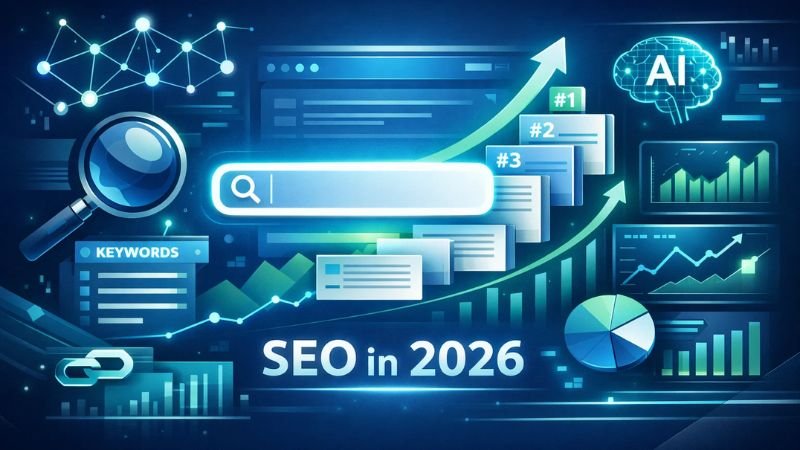
To both search engines and AI-powered answer services, topical authority, which is the publishing of a comprehensive cluster of content around one specific topic, is one of the most powerful SEO marketing tactics in 2026, indicating domain expertise. Google SGE and Perplexity are examples of such services.
Content Marketing: Educate, Engage, and Convert
Content Marketing drives all other digital channels. For example, without compelling content, there’s nothing for your SEO to rank, nothing for your social media to share, and nothing for your email campaigns to discuss. In 2026, great content will be well researched, truly beneficial, and perfectly aligned with user intent at every part of the buyer journey.
- Long-Form Blog Posts: Detailed guides with over 1,500 words establish topical authority, provide answers to genuine user questions, and gain organic backlinks.
- Short and Long-Form Video: TikTok and Reels result in discoverability, while YouTube tutorials provide trust and give educational value over a long period.
- Case Studies and Whitepapers: These are proof-driven, especially for B2B brands, emphasising results that are powerful for lead generation.
Social Media Marketing: Build Community and Drive Engagement
Social media marketing in 2026 is about building genuine communities, not simply accumulating followers. Each platform serves a distinct purpose, and choosing wisely is critical:
- Instagram and TikTok: Best for B2C brands targeting younger audiences with visual-first, short-form video content that drives discovery and engagement.
- LinkedIn: The premier B2B platform for thought leadership, professional networking, and reaching decision-makers in your industry.
- YouTube: The world’s second-largest search engine — essential for video SEO, long-form education, and building lasting audience trust.
Organic reach across all platforms continues to decline. Pairing organic social media marketing with targeted paid social campaigns is now the standard for consistent, scalable brand visibility in 2026.
Email Marketing Strategy: The Highest-ROI Channel in Digital
A well-executed email marketing strategy delivers an average return of $36 for every $1 spent – making it the highest-ROI channel in digital marketing. In 2026, AI-driven personalisation and behavioural automation have made it even more powerful. The three pillars of a high-performing email programme are:
- Segmentation: Divide your subscribers by behaviour, interests, purchase history, or funnel stage to deliver messages that feel personally relevant and drive measurable action.
- Automated Sequences: Welcome series, cart abandonment flows, and re-engagement campaigns that run automatically and convert at scale without ongoing manual effort.
- Personalisation and A/B Testing: Use dynamic content blocks and test subject lines, CTAs, and send times continuously to improve open rates and click-through rates over time.
Pay Per Click (PPC) and Lead Generation Strategies
While SEO builds long-term organic visibility, Pay Per Click advertising delivers immediate, targeted traffic. By bidding on high-intent keywords, you place your brand directly in front of users who are ready to take action. In 2026, AI-powered tools like Google Performance Max automate bidding and multi-channel ad placement, maximising the return on every rupee or dollar invested.
Driving traffic is only half the job. Effective lead generation strategies convert that traffic into qualified prospects through:
- Lead Magnets: Free, high-value resources – eBooks, templates, checklists, or webinars – offered in exchange for contact information.
- Optimised Landing Pages: Dedicated pages built around a single, compelling offer with a clear CTA, strong social proof, and minimal distractions.
- Retargeting Campaigns: Re-engaging visitors who did not convert on their first visit using personalised ads across both search and social platforms.
Affiliate Marketing and Digital Marketing for Small Businesses
Affiliate marketing operates on a performance model. Publishers, bloggers, and influencers advertise your products or services. They receive a commission when a sale or a lead is generated. This is one of the most cost-effective methods to increase your visibility. It’s especially beneficial for e-commerce and SaaS businesses. You only have to pay when results are achieved.
A precise digital marketing approach for small businesses should remain uncomplicated and target the correct demographic. Local Search Engine Optimisation enables you to reach customers in your vicinity and helps to build your email list from the outset. Focus spending on content that demonstrates thought leadership and pursue PPC advertising on specific keywords that consumers are actively searching. Start with the basics, monitor outcomes, and only expand if there are clear results. This approach is currently working well in theory.
Measuring What Matters: Key Digital Marketing Metrics
A digital marketing strategy’s effectiveness hinges on your capacity for measurement and iteration. Measure the following key performance indicators (KPIs) for every digital marketing channel you are tracking:
- Organic Traffic and Keyword Rankings: You need to track your SEO performance through time by observing how your website ranks on search engines and how many people visit your site.
- Conversion Rate and Cost Per Lead (CPL): Evaluate the performance of each marketing channel by tracking how well they change website visitors into business-qualified leads and paying customers.
- Email Open and Click-Through Rates: Measure your list’s current status and subscriber involvement to create better email marketing strategies.
- Return on Ad Spend (ROAS): Assess revenue versus spend on all marketing channels such as PPC, paid social, and affiliate marketing.
Conclusion
Brands win in 2026 when they have a plan and execute consistently. Content Marketing, SEO Marketing, email marketing, lead generation strategies, and Affiliate Marketing each offer different sorts of value when it comes to succeeding online. These three channels help with building traffic, converting visitors, and growing audiences. Purpose, intent, or measurement bias do not affect the validity of either method.
Basically, the basics stay the same whether you’re enhancing an existing digital marketing strategy or creating one from scratch. Get to really know your audience. Make content that really matters. Post it on the sites where your audience congregates. Monitor every result. The point is, you get results only when you keep trying.
Are you ready to convert your strategy into real, measurable growth? Octaads Media is a full-service digital marketing agency that also includes SEO, paid media, content writing and reporting on results. Visit www.octaadsmedia. com and start developing a digital presence that gets results.
How does your brand stay competitive as AI transforms the way search engines rank and display content? Knowing these new standards of organic visibility is a must. Read our follow-on guide, Search Engine Optimisation (SEO) in the Age of AI: A New Era of Visibility, for an insight into how AI-driven algorithms will transform SEO strategy in 2026 and what your brand must do to keep its search results strong.
Frequently Asked Questions (FAQs)
A: Digital marketing is any marketing that is done on the internet or other digital means, from using search engines and social media to sending emails and buying space for paid advertising. Why does it matter in 2026? Because that’s where most consumer research, buying decisions, and purchases take place online, and that’s where you need to be if you want to grow.
A: The best channels to acquire customers through digital marketing vary by type of business and type of audience, however, the best channels of digital marketing in 2026 will be Search Engine Optimisation (SEO) for organic business visibility on search engines, Pay Per Click (PPC) for precise targeting, email marketing strategy for retention and social media marketing for brand awareness.
A: Build your small business digital marketing plan by focusing on local Search Engine Optimisation (SEO) for nearby clients, collecting email addresses, posting regular content for authority, and conducting low-budget Pay Per Click (PPC) campaigns on lead-generating, high-intent keywords.
A: Content Marketing is what powers all digital strategy channels with one thing to contribute towards Search Engine Optimisation rankings, social media shares and email campaigns. 2026: Good quality, comprehensive content demonstrates expertise, earns rankings, establishes trust, and drives conversions.
A: Affiliate marketing is a model based on performance where publishers, bloggers, or influencers promote products for which they are paid commission on sales or leads. It is ideal for e-commerce brands, SaaS companies, and other businesses with clear offers for scaling reach without upfront advertising costs.
A: Pay Per Click and paid social are a quick way to drive traffic. Search engine optimization takes three to six months to produce results. Email Marketing and Content Marketing provide consistent long-term returns if you keep them on track. Results are not always the same. Each system operates a little differently as time goes by.
Last Updated on: September 25, 2026
Leave A Comment